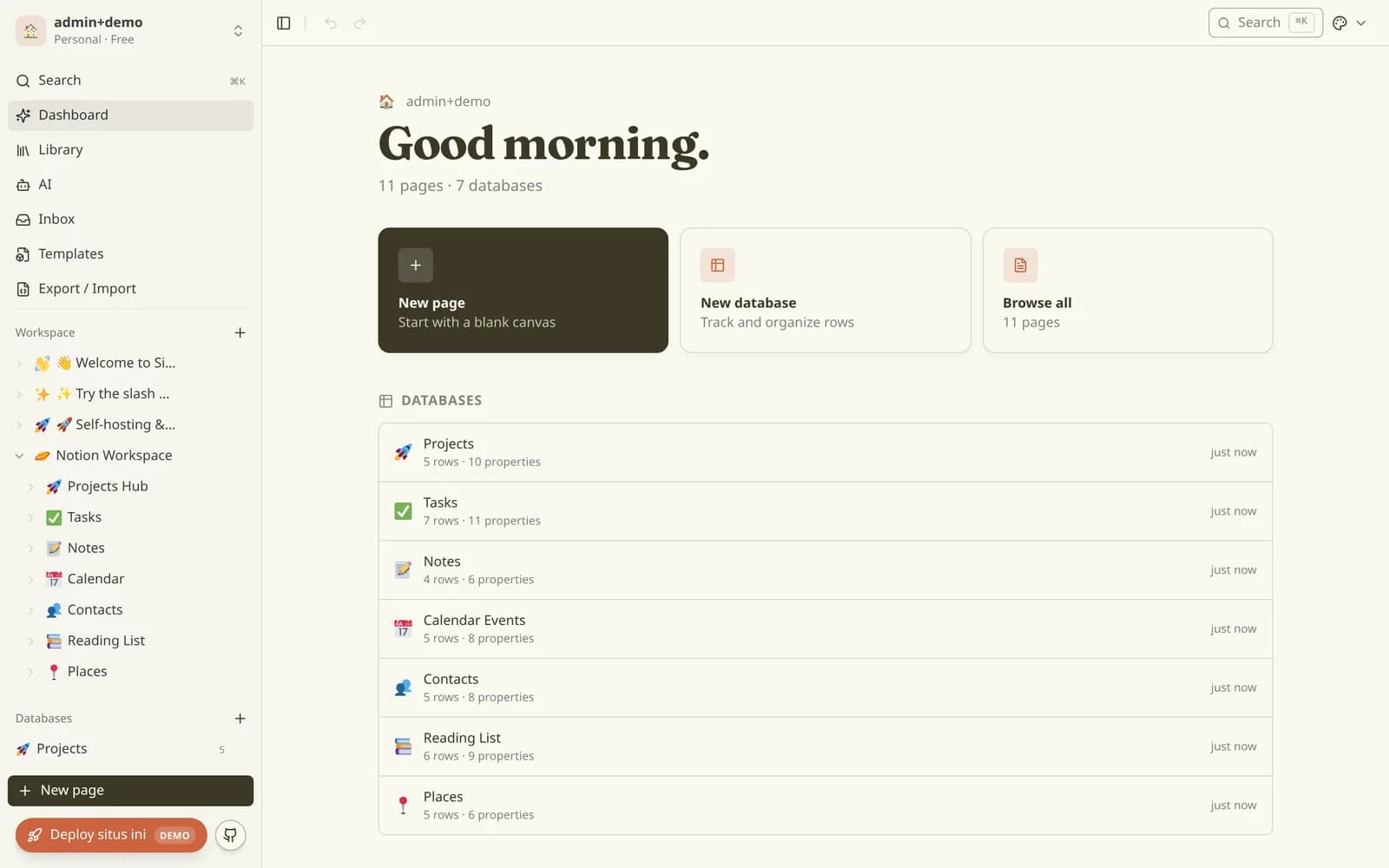
Released · open source · self-hostable
Silong
Workspace open-source untuk dokumen berbasis blok, tampilan database, graf pengetahuan, kolaborasi, dan berbagi halaman, dilengkapi impor/ekspor serta antarmuka HTTP untuk integrasi AI.
Bukan sekadar clone. Yang sulit adalah membuat permukaannya menjadi sistem.
Awalnya masalahnya tampak visual: membuat workspace yang terasa familiar. Setelah editor, database, sharing, dan collaboration bertemu, masalah sebenarnya berubah menjadi konsistensi data dan batas antarfungsi.
Open Silong dibangun sebagai vertical slices: setiap pengalaman frontend punya pasangan kontrak backend yang jelas. Itu membuat editor, database, graph, sharing, dan MCP bisa berkembang tanpa menjadi satu komponen raksasa.
Versi publiknya bisa langsung dicoba sebagai guest workspace. Jalur self-hosted juga disiapkan agar pengguna dapat menentukan sendiri tempat data dan infrastrukturnya.
Apa yang benar-benar dibangun.
Fitur di bawah bukan roadmap dekoratif. Semuanya berasal dari produk dan dokumentasi yang berjalan saat case study ini disusun.
Block editor
Slash menu, nested content, inline formatting, media, equation, columns, synced blocks, dan lebih dari tiga puluh tipe blok.
Database system
Sebelas view, dua puluh tujuh property types, filter, sort, grouping, search, dan inline/full-page modes.
Knowledge graph
Wikilinks, mentions, tags, backlinks, ghost nodes, dan d3-force graph dengan focus serta neighbourhood highlighting.
Collaboration
Multi-workspace, roles, invites, public sharing, page grants, comments per block, presence, dan version snapshots.
Portable data
JSON round-trip, Markdown export, ZIP bundle, dan pilihan Convex Cloud atau self-hosted Docker stack.
Agent-ready
MCP HTTP surface memakai representasi JSON yang sengaja dibuat mudah dibaca integrasi dan AI agents.
Bukti, bukan mockup.
Semua frame berasal dari repository atau capture produk. Tidak ada dashboard palsu yang dibuat khusus untuk portfolio.
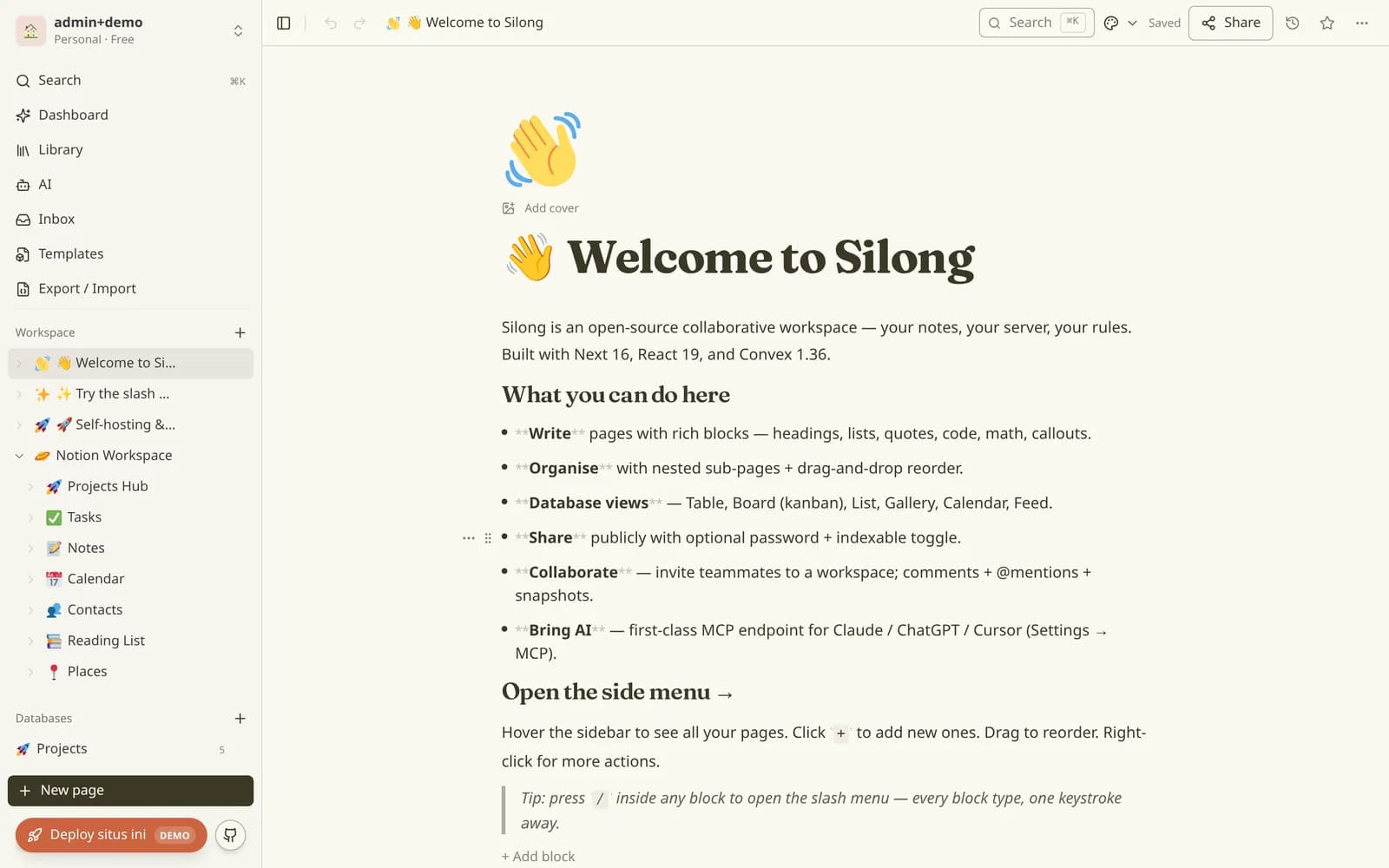 Editor — rich blocks, slash menu, cover, dan nested content.
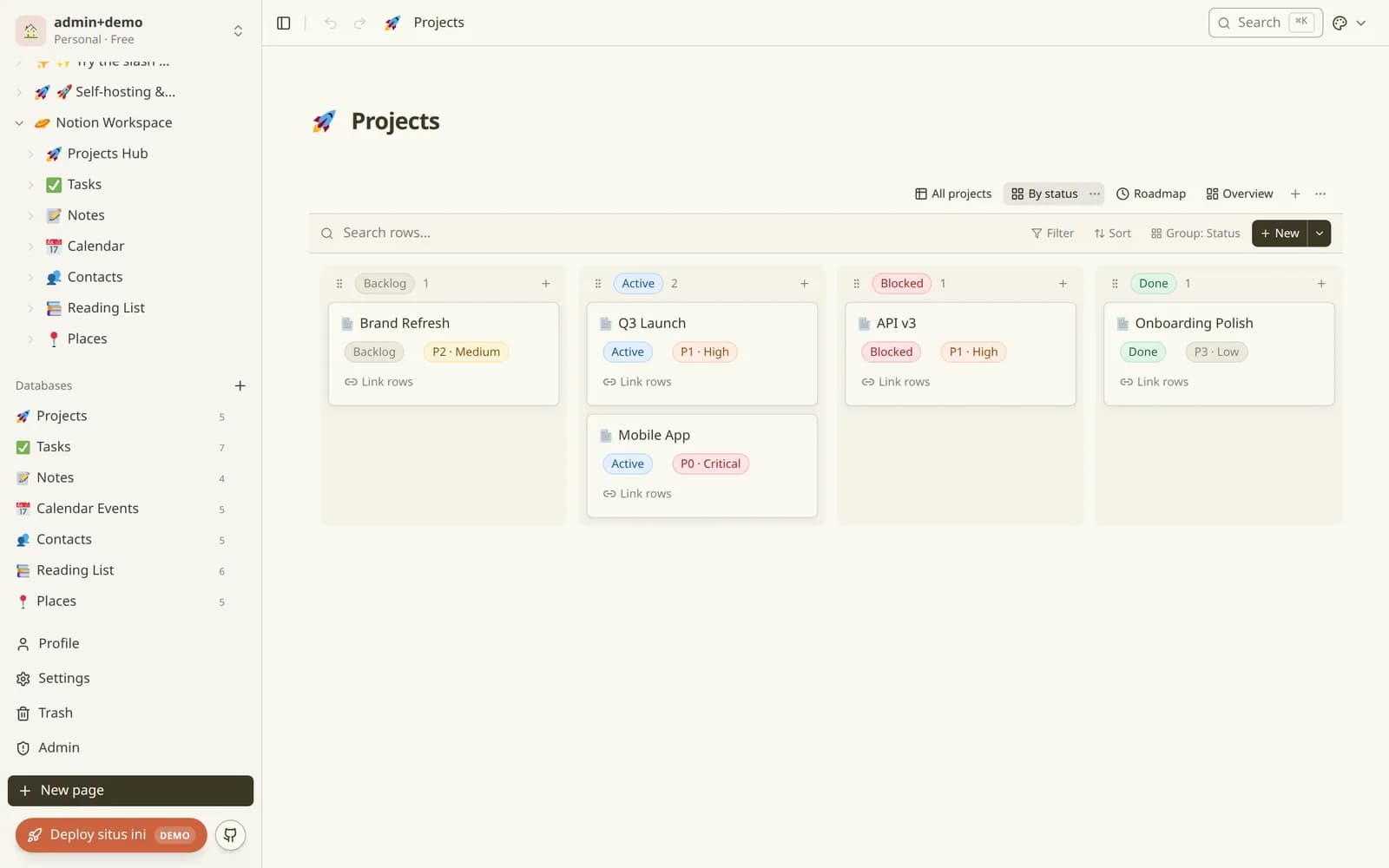 Database — board view yang berbagi model data dengan view lainnya.
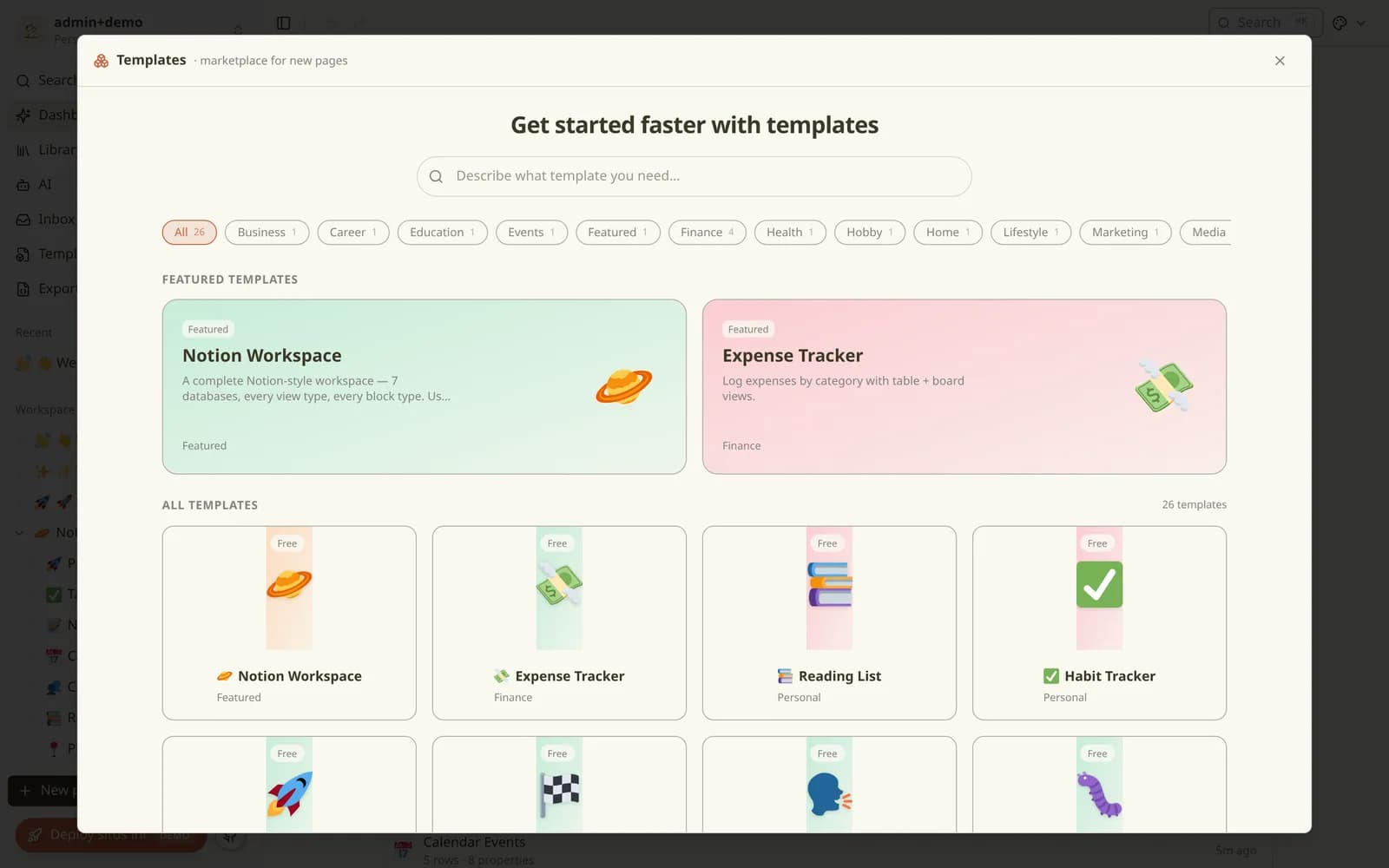 Templates — gallery untuk memulai workspace tanpa halaman kosong.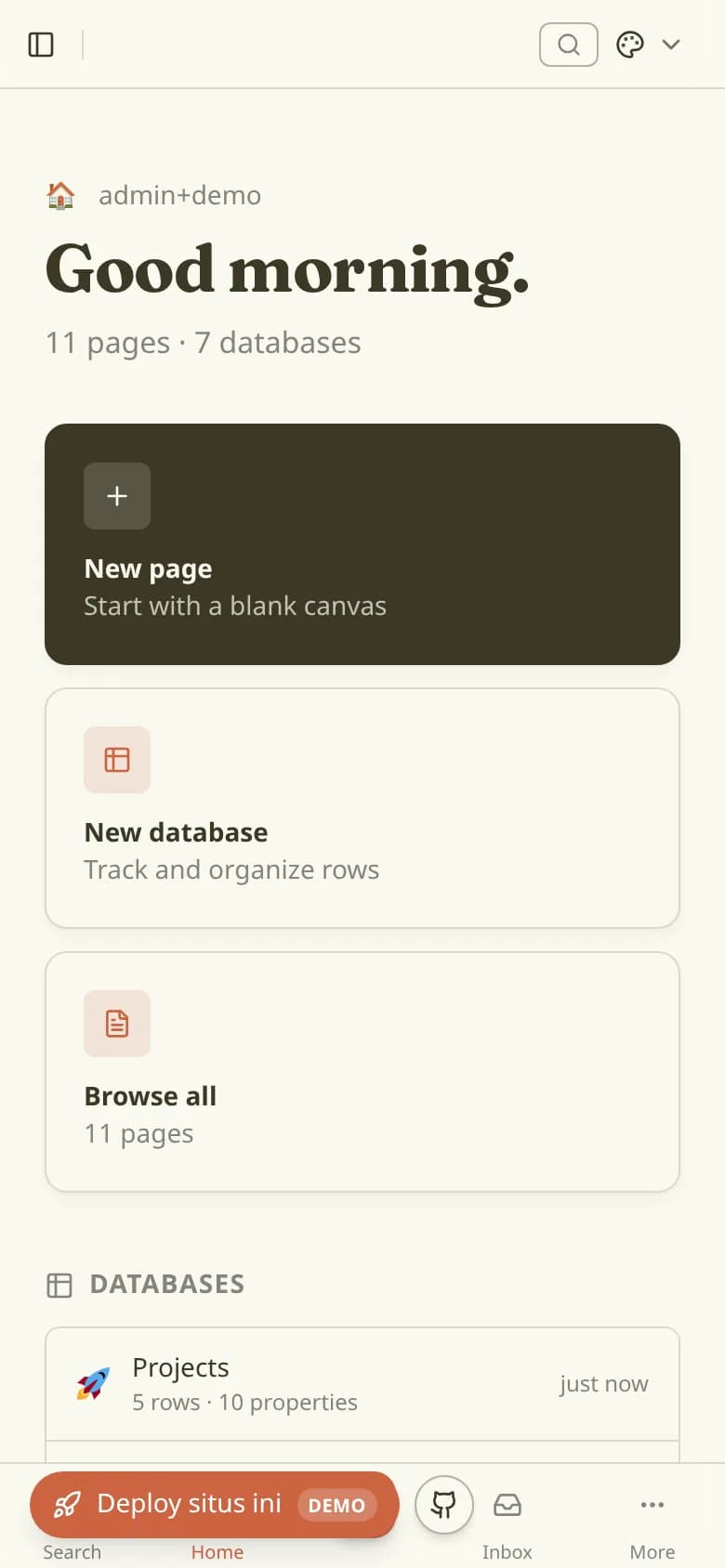
Yang terbawa ke proyek berikutnya.
Familiar UI belum berarti mudah dibangun; data model menentukan kualitas pengalaman.
Prinsip ini sekarang dipakai lagi saat merancang produk, workflow, dan sistem lain.
Self-hosting perlu diperlakukan sebagai product path, bukan catatan deploy di akhir.
Prinsip ini sekarang dipakai lagi saat merancang produk, workflow, dan sistem lain.
AI integration lebih berguna saat menjadi kontrak data, bukan chat box yang ditempelkan.
Prinsip ini sekarang dipakai lagi saat merancang produk, workflow, dan sistem lain.